

To optimize for AI search, make your brand easy to identify, put clear facts on the pages that sell, keep the technical basics solid and earn mentions on sites AI tools already trust. That was the shared thread across six talks I heard on October 10, 2026. If you'd rather have help than a reading list, this is the work behind my AI and GEO SEO service.
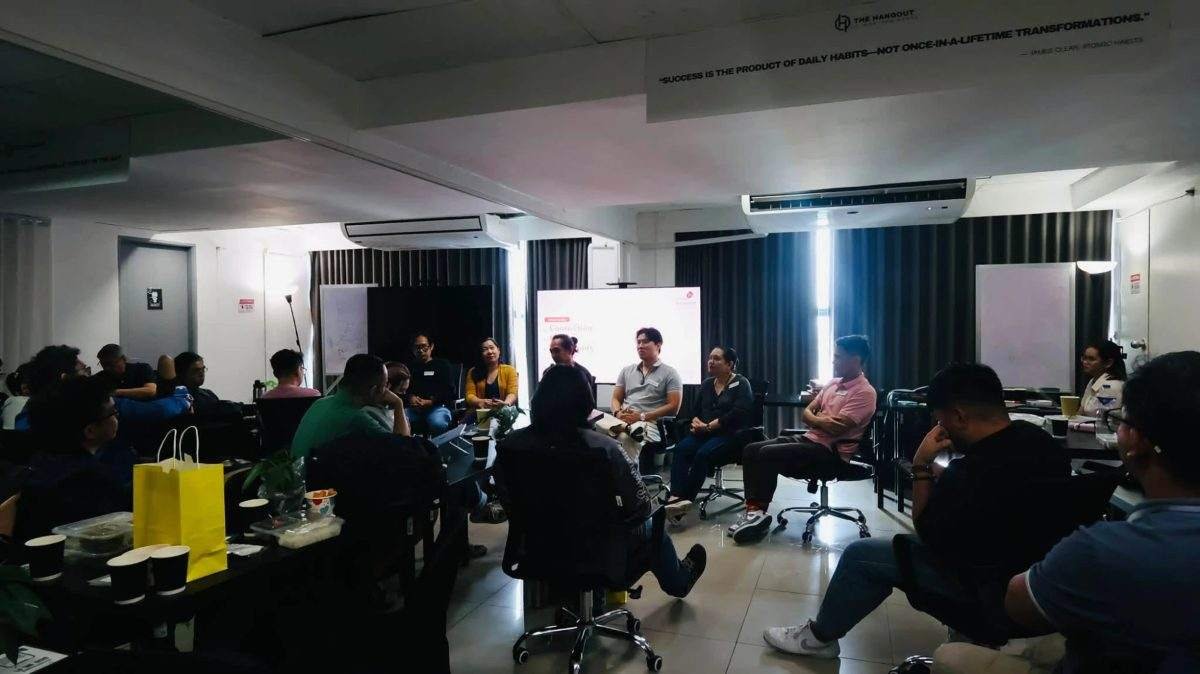
I'm Kim Alimorom, a freelance SEO specialist working remotely with clients mostly in the United States, Australia and Europe, with more than five years in SEO and a focus on online stores. I spent that Saturday at Kita Tayo, an SEO and digital marketing community meetup, and these are my notes, credited to the people who taught them.
What I Took Home From Six Talks
- Be a clear entity. Same name, same description, everywhere your brand appears online.
- Most AI visibility is earned off your site. Reviews, roundups and mentions on trusted pages carry a lot of weight.
- Landing pages now confirm, not educate. Visitors arrive with an AI summary in their head and want price, fit and proof.
- Technical SEO still decides eligibility. A page that isn't indexed can't be cited.
- Measure trends, not snapshots. AI answers change from one run to the next.
- Automate with a review gate. AI can run your process, but a person should approve what goes live.
The Meetup At A Glance
Kita Tayo is a community meetup for SEO, content and digital marketing people, hosted by Krisette Lim. It ran from 9:00 AM to 1:00 PM at The Hangout Coworking Space in Pasig, Metro Manila, with six talks and a lot of honest conversation about AI Overviews.
| Speaker | Role (as listed on their slides) | Talk | One line I wrote down |
|---|---|---|---|
| Krisette Lim | Host; SEO and content marketing consultant | Welcome, the why, and community | Connection, clarity and community are the reason the group exists. |
| Sean Si | Founder and CEO, SEO Hacker | The New Age of Search | Optimize the evidence AI can retrieve and confidently repeat. |
| Jason Acidre | Co-founder and CEO, Avaris IO | LPO for AI Search | The page's job changed from education to verification. |
| Jerome Esperanza | iBuild.PH | Technical SEO in an Enterprise Context | Migrate first, optimize second. |
| Chris Benitez | Freelance SEO and content strategist | SEO at the Speed of AI | The process is the asset. AI runs it. |
| Andrea Toribio | Head of Marketing, PeoplePartners Inc. | You Can Vibe Code It. But Should You? | If it breaks at 2 AM, whose phone rings? |
| Jonah Chipeco | Marketing project manager, Writing Hacks Academy | How to Keep Digital Projects on Track | Keep the outcome in sight and the people informed. |
Make Your Brand A Clear Entity First
AI tools recommend brands they can identify with confidence, so the first job is consistency. Sean Si's closing line put it well: you don't optimize for a language model by trying to impress it, you optimize the evidence it can retrieve, understand, corroborate and repeat. His checklist started simple: use the same name and the same description everywhere online.
He also shared numbers from his own testing. When you ask an AI tool the same question 100 times, he said, the same brand list comes back less than once, and the same list in the same order less than once in 1,000 runs. His takeaway wasn't that it's random. It was that you need to measure repeatedly and lean on things that make you retrievable: category, need and location stated clearly, plus mentions on sources the engines already trust.
Earn The Mentions You Can't Write Yourself
A big share of AI citations point to pages the brand doesn't own. Jason Acidre showed two citation breakdowns where 81% and 97% of citations came from third party pages such as review sites, news, retailers and niche blogs. His estimate was that on-page work accounts for roughly 25 to 30% of what moves in AI search, and the rest comes from outside validation.
Sean's list of places worth a relevant mention matched that: review platforms, YouTube descriptions, podcasts, event pages, original studies that others quote, industry publications, expert roundups, associations, supplier and partner pages and high-quality directories. Our guide to generative engine optimization covers the same idea from the definition side.
Turn Landing Pages Into Proof Pages
People who still click through from an AI answer arrive later in their journey and want confirmation. Jason's framing was "education to verification": the page should answer fit, price, risk and proof fast. He walked through what that means in practice, and it maps neatly onto product and service pages.
| Vague claim | Extractable fact (the kind Jason recommended) |
|---|---|
| Competitive pricing | Plans from a stated price per month, billed annually |
| Fast turnaround | Delivered in a stated number of business days |
| Years of experience | Founded in a stated year, with a count of projects completed |
| Trusted by businesses | Used by a stated number of teams, with named clients |
| Customers love us | A stated rating from a stated number of reviews |
His other page level tips: give each section one sub-intent and answer it in the first line, write FAQs for the commercial questions a buyer asks before deciding, put key facts in server-rendered HTML rather than images or tabs, and mark up only what is visible. For online stores, I'd start with the product pages that already earn impressions; our guide to product page SEO covers the basics.
Keep The Technical Foundation Boring And Solid
Technical SEO still decides whether a page can appear at all. Jerome Esperanza answered "does technical SEO still matter?" with one slide that just said yes, and Google agrees: to show as a supporting link in AI Overviews or AI Mode, a page "must be indexed and eligible to be shown in Google Search with a snippet," according to its documentation on AI features.
Most of his talk was migration war stories. His rule was migrate first, optimize second, because changing the CMS, design, content and URLs at once removes your control group. He also warned against "fixing the report": redirecting every 404 to the homepage makes Search Console look cleaner while hiding real problems. If you run an online store, our guide to eCommerce technical SEO covers the foundations.
| Migration problem Jerome described | What he recommended |
|---|---|
| Everything changed at once, so results can't be attributed | Capture a baseline, preserve existing signals, validate, then optimize |
| Old URLs lose their links, rankings and bookmarks | Map old to new URLs, 301 redirects, updated canonicals, internal links and sitemaps |
| Thousands of legacy URLs with predictable patterns | Automate the pattern, handle exceptions separately, test the redirects |
| Search Console and GA4 numbers don't match | Check property scope, hostnames, tracking tags before assuming lost traffic |
| A security layer blocks crawlers by mistake | Inspect security events and confirm Googlebot can reach public pages |
Google's own guide to moving a site with URL changes says the same thing about mapping: "It's important to map your old site's URLs to the URLs for the new site."
Measure AI Visibility As A Trend
Because answers vary between runs, a single screenshot proves very little. Sean's method was to write about 50 real buyer questions instead of keywords, list every competitor the AI names, run each prompt many times and average it, weight platforms by audience, find the pages AI cites and get on them, then report share of voice monthly. His point: a trend beats a snapshot, and a brand can lose share without doing anything wrong because a competitor gained mentions.
For Google specifically, its page on AI features and your website says this traffic is included in Search Console, under the Web search type. Jason's suggestion for the page level was simpler: pull Search Console and GA4 into one sheet weekly, with impressions, clicks, CTR, average position and generative AI impressions for each optimized URL. Here's what that kind of data looks like on a real store: for Mergescreens, Search Console shows 1.14 million impressions in Google's AI features between May 18 and October 9, 2026. The Mergescreens case study lists the sources and dates.
Automate The Process, Not The Judgment
AI can run a well-written SEO process, but a person still needs to approve what goes live. Chris Benitez showed his monthly loop of audit, task plan, execution and reporting, each written as a plain text "skill" that AI runs. By his own timing, a client month went from about two working days to about an hour, mostly review, with review gates before anything is published.
Andrea Toribio gave the counterweight. Building got cheap, she said, but owning didn't: a tool that works in your browser on sample data is different from one with live CMS access and client credentials. Her rule of thumb was reversibility. A private draft is a two-way door you can undo; an automatic publish is a one-way door, because "rollback restores a web page. It does not restore customer trust." She also showed why diagnosis comes before rewriting: a traffic drop can be demand, redirects, indexing or stale content, and only the last one is fixed by a rewrite.
Jonah Chipeco closed the loop on delivery. Her QuaRTS² framework checks Quality (outcome versus output), Resources (people, budget, skills, tools), Timeline (a shared calendar) and Scope and Steps (who owns what). It's a project management talk, but it's exactly what keeps an AI search project from drifting.

Where I'd Start This Week
| Priority | Task | Lesson it comes from |
|---|---|---|
| Highest | Confirm your money pages are indexed and crawlable | Jerome: technical eligibility comes first |
| Highest | Use one name and one description everywhere | Sean: entity clarity |
| High | Rewrite vague claims as facts on product and service pages | Jason: verification pages |
| High | List the pages AI cites in your niche and earn a mention there | Sean and Jason: off-page validation |
| Medium | Track AI impressions per URL weekly | Jason and Sean: measure the trend |
| Medium | Write your process down before you automate it | Chris and Andrea: process first, review gates |
A Few Reality Checks Before You Chase AI Answers
- No one controls AI answers. Sean's own tests showed the same list rarely comes back twice, so be wary of guarantees.
- No special files are required. Google says you "don't need to create new machine readable files, AI text files, markup, or Markdown" in its guide to generative AI features.
- Your site is only part of it. If most citations come from third party pages, on-page work alone won't move the needle.
- Diagnose before you rewrite. A rewrite only fixes stale content, not lost indexing or broken redirects.
- The numbers in this post are the speakers'. They come from their slides and their own data, not from my testing.
Questions People Ask About AI Search Optimization
How Do I Optimize My Website For AI Search?
Make your brand a clear entity, keep key pages indexed and crawlable, state specific facts on the pages that sell, and earn mentions on sites AI tools already cite. Then measure your visibility over time instead of from one result.
Is SEO For AI Search Different From Regular SEO?
Google says SEO best practices remain relevant for its AI features. The emphasis shifts toward clear facts, entity consistency and third party mentions, but the foundation is the same.
How Do I Get Cited By AI Tools?
Publish specific, quotable facts on your own pages and earn relevant mentions on review sites, roundups, publications and partner pages, since many citations point to pages the brand doesn't own.
Do I Need An Llms.Txt File Or Special Markup?
Google says no new machine readable files, AI text files, markup or Markdown are needed to appear in its AI features. Accurate structured data that matches the visible page still helps search engines read it.
How Can I Measure AI Search Visibility?
Search Console includes traffic from Google's AI features in the Web search type, and it reports generative AI impressions. For other assistants, run real buyer questions repeatedly and track your share of mentions monthly.
Does Technical SEO Still Matter For AI Search?
Yes. A page has to be indexed and eligible to show with a snippet before Google can use it as a supporting link in AI Overviews or AI Mode.
How Long Does It Take To Show Up In AI Answers?
There's no fixed timeline, and nobody can guarantee inclusion. Fix eligibility and on-page facts first, then expect off-page mentions to take longer to build.
What Does AI Search Optimization Cost?
It depends on how many pages need work and how much off-page validation your niche needs. I give a clear quote after a free first audit, so you know what's included before you commit.

Pick One Fix And Start With Your Money Pages
The talks pointed the same way: AI search rewards brands that are easy to identify, pages that state facts plainly, sites that are technically sound and reputations built on other people's pages. Start with one money page this week. Confirm it's indexed, replace its vague claims with specific facts, and note its AI impressions so you have a baseline.
Thank you to Krisette and every speaker for sharing their decks with the community. If you'd like help applying this to your store or service pages, see my AI and GEO SEO service or request a free SEO audit.

Need Help With AI SEO & GEO?
Get your brand cited in AI Overviews, ChatGPT, Gemini and Perplexity answers.
See the AI SEO & GEO service